



Differences between Canary Islands are most pronounced on those islands that are less developed for tourism such as La Gomera, La Palma, El Hierro & La Graciosa.
It’s a common misconception that there are few differences between Canary Islands.
Unless all you want to do is fly to one of the islands, stay in a hotel, and spend your days round the pool or on the beach and your nights in the nearest bar, the differences are very evident.
For those who want to combine rest, relaxation and sun with the discovery of the essence of an island – its culture, food, landscapes and way of life away from tourism – simply move away from the purpose-built resorts.
You don’t have to travel far into the interior to find the many differences between Canary Islands. Equally, try visiting some of the less spotlight-hogging islands such as La Gomera, La Palma, El Hierro and La Graciosa for a very different Canary Island experience.

In Part 1 of Differences Between Canary Islands (Tenerife, Gran Canaria, Lanzarote & Fuerteventura), we outlined some of the factors that have influenced how each of the eight islands looks and feels, including weather, tourism, and agriculture. We then went on to look at descriptions of the four major islands.
Here, we’re looking at the smaller, and the less well-known islands of La Palma, La Gomera, El Hierro and La Graciosa.
A snapshot of the differences between Canary Islands
La Palma
Heart-shaped La Palma is the most water-rich and beautiful of all the Canary Islands. The entire island is a recognised UNESCO World Biosphere Reserve. Its flower-filled spring meadows, lush vegetation, crystal-clear night skies, and dramatic Caldera de Taburiente volcanic crater have justifiably earned the island the nickname La Isla Bonita.

The steepest island on the planet, La Palma’s only concessions to tourism are the small purpose-built Los Cancajos which hems a small section of the east coast south of its stunning capital, and the charming, west coast Tazacorte, much loved by Palmeros.

In the lush, verdant north of La Palma, the dense tropical foliage and giant ferns create an environment that looks and feels like it hasn’t changed since dinosaurs roamed the Earth. In the south, dramatic volcanic eruptions have created a landscape of dark, rocky picón beneath which, mineral-rich soil provides nourishment for the island’s award-winning vines.
Santa Cruz de La Palma is probably our favourite capital in the Canaries. Entirely rebuilt following its destruction by pirates in the mid-16th-century, its attractive blend of New World colonialism and traditional Canarian architecture provides a rare uniformity of style and a close resemblance to Havana. It also, strangely, has a full-sized replica of Columbus’ ship, the Santa Maria in which the naval museum is housed.
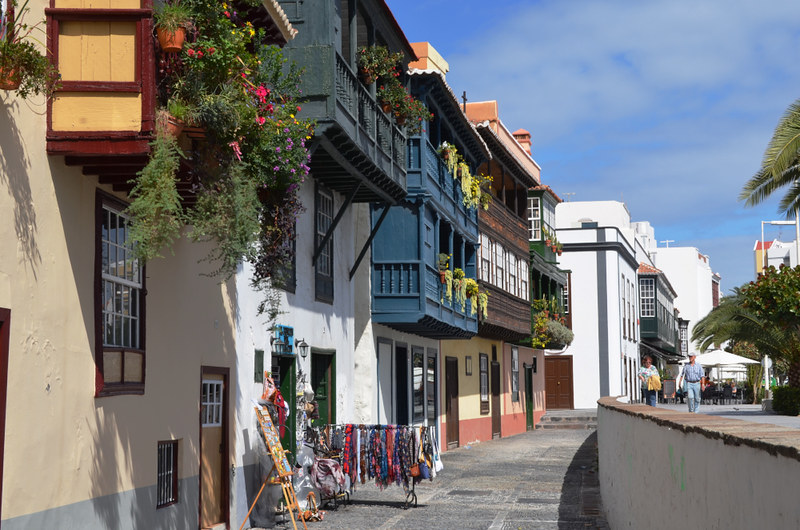
As well as a lively shopping scene; the much-photographed Los Balcones; and pretty plazas in which to enjoy a barraquito coffee, the bar and restaurant-lined Avenida Marítima is hemmed by a kilometre of black sand beach.
For hikers, La Palma’s routes provide some of the best walking in the Canary Islands, while its night skies are some of the clearest on the planet.
La Gomera
A short ferry ride and a million miles away from its arid, touristic neighbour of southern Tenerife, La Gomera’s landscape is sub-tropical, lush and fertile. It’s also a dramatic example of the differences between Canary Islands. Unlike the rest of the archipelago, La Gomera’s mountainous terrain, where ridges are divided by abyssal barrancos (ravines), makes travel around or across the island a slow and laborious affair best suited to on foot exploration.
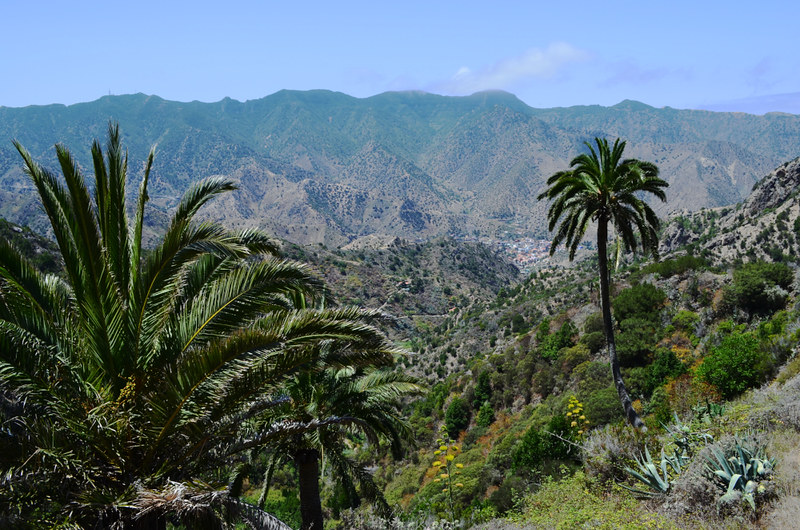
Rising above the canopy of its dense vegetation, the fat trunks and ebullient heads of Canarian date palms resemble exotic birds and are an abiding icon of the landscape. The sap from the young leaves at the crown of the palms, produces a sticky resin that, when boiled rapidly for 2-3 hours, produces a rich, sweet, smoky syrup which is completely organic, and high in mineral content. It’s also addictively delicious. On La Gomera, it’s known as ‘the queen of the kitchen’ and is drizzled over goats’ cheese or fresh fruits, in dressings and to sweeten desserts.
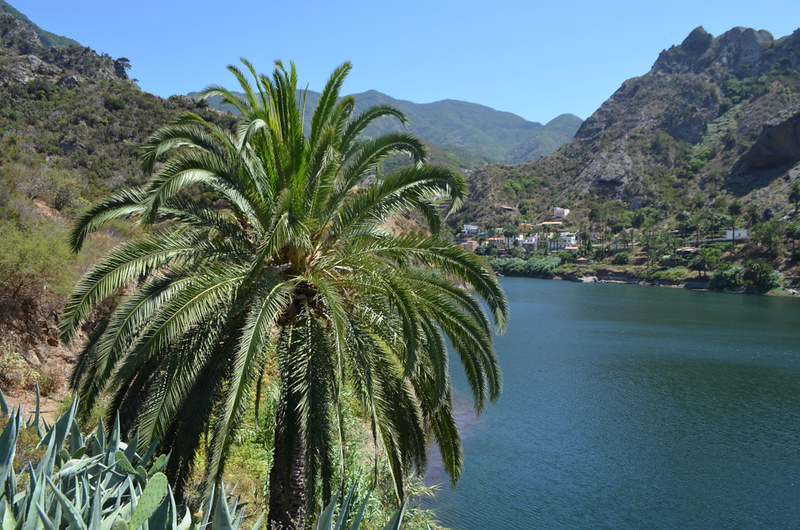
La Gomera is a stunning island, and you’ll need patience and time to explore it. Known throughout Europe as a hiker’s paradise, its steep ascents and descents are not for the faint-hearted or for those who have a fear of heights, but the rewards are limitless. Apart from the resorts of Playa Santiago and Valle Gran Rey, there are few concessions to tourism. The bulk of the population live in the interior and scratch out a hard living from the unforgiving terrain.

Yet, the island has its surprises. This is the last place Columbus visited before setting off on his world-changing voyage of 1492; due to the difficulty of traversing the island, its original inhabitants developed a whistling language known as el silbo. Today, el silbo is still practised and has been recognised as an official language which means it’s taught in schools.
El Hierro
Youngest of the Canary Islands, El Hierro was considered the end of the known world and was the site of the Meridien before it was moved to Greenwich in 1884. In keeping with ‘end of the known world’ status, El Hierro’s landscape epitomises the differences between Canary Islands; it’s unlike any of the others.

The central plains of Meseta de Nisdafe consist of fields and meadows, features rarely seen anywhere else in the Canaries. Its El Golfo valley, created by a massive landslip around 15,000 years ago, is carpeted in mangos, papayas, avocados and pineapples – the only island to produce the spikey exotic. In the misty forests of La Dehesa, wild juniper trees grow horizontally across the land. Bent double by the prevailing winds, their tangled branches and twisted trunks resemble petrified witches.

El Hierro’s capital of Valverde lies 700m above sea level and is inland, the only Canarian capital not located at the coast. At its southern tip, the island is still being formed. In 2011, a sub-marine volcanic eruption occurred just 2-3km off the coast of Restinga, creating a new island.

A virtual stranger to the tourism sector, El Hierro is unique even among the Canary Islands. Its appeal lies in its remoteness, its beauty, and the magic of its landscape.
La Graciosa
Only recently officially recognised as ‘the eighth island’, tiny La Graciosa lies off the northern tip of Lanzarote and has yet another unique look that separates it from all the other islands.
Only accessible from the sea (there’s no airport), La Graciosa is just 8km long and 2.5km wide. A white sand island, it has no tarmac and no trees outside of Caleta de Sebo which also has the island’s only road, a sandy track. La Graciosa’s resident population of 700 receives a lot of financial help from the government to encourage them to stay: Fishermen get subsidies to buy or upgrade their traditional vessels and residents get subsidised travel within the islands to allow them to stock up on goods and to travel to medical appointments.

Caleta del Sebo is La Graciosa’s only town and the place you’ll find most of the island’s limited accommodation. Its buildings and landscape leave you in no doubt as to where you are; 125km off the coast of Africa. For visitors, there is little to do on La Graciosa but take off your shoes, and for some, all your clothes, and enjoy the beauty, silence and solitude.


Leave a reply