



When writing about the Canary Islands, or any destination, it can be difficult to know what is common knowledge . . . and what isn’t.
An example of this happened on an online publishing platform where I posted an article about Lanzarote, how it was the only Canary Island which didn’t surprise me. Some years ago, Andy and I wrote weekly articles about the eastern island for a hotel there. Over various visits we enjoyed getting to know Lanzarote better, but we already knew about all the ‘best bits’ beforehand.

However, someone left a comment on the article, mentioning somewhere we hadn’t heard of that had wowed them. It was Tenesar on the north coast. Although we’d visited other places nearby, we couldn’t recall Tenesar, so checked it out on Google. Turns out, it’s one of those little coastal caserios (like a hamlet). The person who left the comment was blown away by stumbling across what seemed like an abandoned little coastal hamlet set into a volcanic landscape where the only land access was via a dirt track. It was a revelation to them, which is understandable. It’s not what people expect to find on islands known for mass tourism.
However, what they clearly didn’t know was there are loads of similar places dotted across the Canary Islands.
Abandoned villages
We first heard about abandoned villages before we moved to the Canaries. It was at a party in a friend’s house on the edge of Garajonay on La Gomera. One of the guests was a man whose aim was to track down all of La Gomera’s ‘lost’ villages. Sometimes, these were little more than a handful of houses.

Tenerife has its own lost villages. In recent years, people have been moving back, breathing life into them once again. When we first visited Las Fuentes and Icor they were little more than abandoned caserios. That’s no longer the case.
Then there are the curios, like the leper village that never was at Abades, or the strange little settlement of Guinea on El Hierro which some claim was once populated by slaves. It’s now an intriguing Ecomuseum. A newer addition to this list is Todoque on La Palma, where homes, business, and historic buildings were engulfed by lava from the eruption of the Tajogaite Volcano in 2021.
But none of these are quite the same as Tenesar, which is more of a pueblo de veraneo, a small town or hamlet that lies virtually dormant in winter months, giving it the appearance of ghost town . . . until it bursts into life in summer when Canarios decamp to them.
Coastal Caserios
Our first experience of these was while carrying out research for an ‘In Deep’ article about La Matanza in the north of Tenerife. It was only a couple of years after we’d arrived on the island, and we were still discovering towns and villages that we’d never heard mention of before. One of these was Caletón. Curiosity prompted us to follow a narrow serpentine road which looked as though it led nowhere. At its end was a tiny coastal village clustered around a natural harbour. It was summer and the place was absolutely rammed. When we visited again in winter, it was like the grave.

On another occasion, a couple of years later, we followed a meandering route along Tenerife’s east coast, checking out every road along the way. There are loads of coastal settlements of various sizes along that coast, many of which are completely transformed during the summer months. There are ones with dirt tracks for roads; others whose houses are ramshackle affairs; and even one where some houses sit precariously inside a cave. Some of these types of Canarian coastal settlements are no more (Cho Vito on Tenerife and Escamas on Lanzarote) thanks to Spain’s Ley de Costas. This law decrees that the first 100m from the shoreline is public maritime-terrestrial domain. This effectively meant that many coastal settlements which had existed for decades were classed as being illegal and therefore should be destroyed. Recently, the Canarian Government drafted a Canarian Coastal Law to try to ensure the protection of some of the more historic fishing settlements, hopefully saving the likes of Los Molinos on Fuerteventura, a place whose fate still hangs in the balance.

The shanty towns
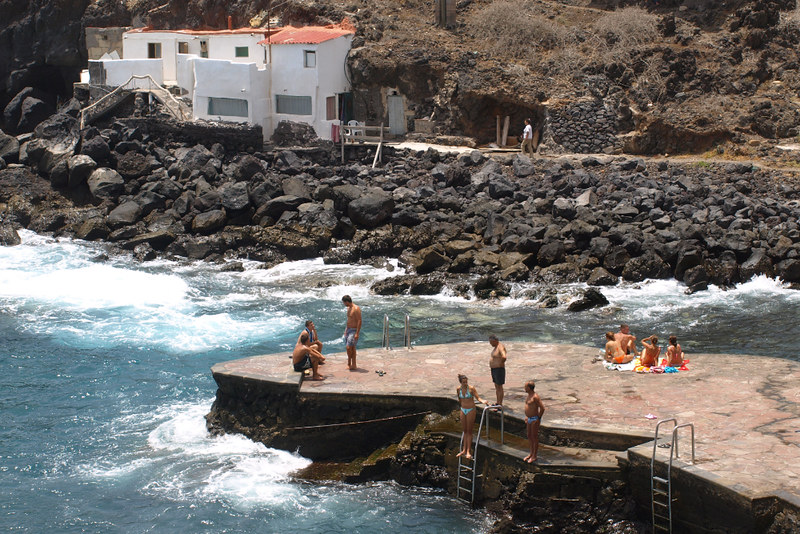
Finally, some of the more ramshackle settlements are the most interesting because they are like throwbacks to another age. One of my favourites of these is Punta Larga on La Palma, where rickety looking fishermen’s houses screened by banana plantations perch on the volcanic shoreline. Another is Calcosas on El Hierro. It’s reached via a walkway that snakes down the cliffs to the village which is hidden from view unless you stand on the cliffs directly above it. What makes it so interesting is its natural sea pool set into pahoehoe lava backed by a cluster of stone houses that look nothing like those of similar coastal settlements on the other islands.
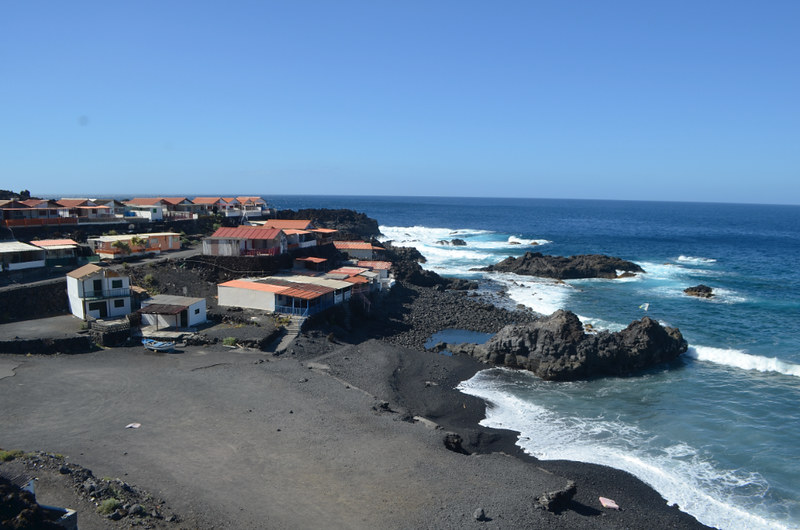
What many of these ‘ghost’ towns share is that they are often tucked away well off the beaten track, which is why you don’t hear much about them.


Leave a reply