


Ever since we launched our Real Tenerife Town & City Guides, the one for Santa Cruz has niggled; it hasn’t felt quite right. We were satisfied the main route covered all the things we felt were most interesting in the centre of Tenerife’s capital. But the secondary route was more like a mini-me version of the primary route. It did have a few differences, but was basically a condensed version created for visitors with restricted time. That’s changed.

The new Santa Cruz self-guided city route
We’ve ditched the smaller route and replaced it with The Sculpture Trail. This is a trail which covers a completely different part of the centre, including an area where many visitors don’t wander. Despite it being peak Northern European season, we hardly encountered any when doing a walk-through earlier in the year.
Ever since our very first visit to Santa Cruz over twenty years ago, when we were commissioned to write an ‘In Deep’ guide for it, one of the things we felt made it stand out was the legacy of the 1st International Exhibition of Sculpture in the Street in 1973. Whereas, in some European cities, you might have to visit a gallery or museum to see works by renowned artists like Henry Moore and Joan Miró, there were quite a few just dotted around the streets of Santa Cruz. That blew us away. Plus, some works were quirky and amusing, and we like to include quirks and things that make us smile in our guides.

More than just sculptures
Some might consider sculptures as dry, boring. We’re fans, and like to sculpture-spot wherever we visit. But not necessarily for art appreciation purposes. Sculptures might be beautiful to look at, but they can also put a smile on the face or give an insight into both military and social history. Basically, they can be keys to unlocking the character of a place. Take the Ángel de la Paz (Angel of Peace). It’s an impressive work of art stained by controversy – a monument connected to Franco, even though these are now prohibited under Spanish law. It’s so eye-catching, it can distract from other, rather poignant sculptures nearby. We use the guide to make sure these aren’t overlooked. We’ve also added little detours leading to reminders of past life in the city – a washerwoman beside the communal washing area, some of which still actually exist and are used in parts of the Canaries.
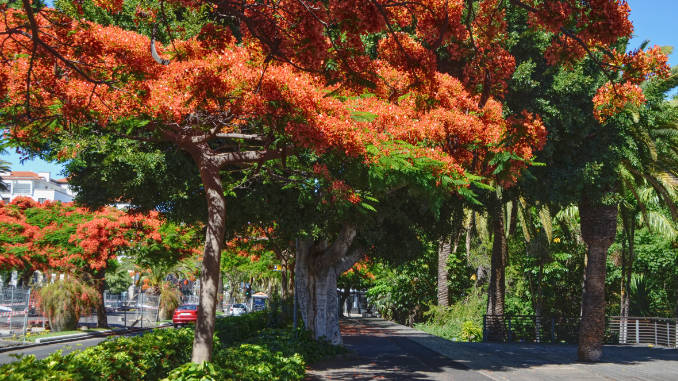
Much of the route is shaded, a real bonus in a city where sunshine is the default setting. It can be sweaty stuff traipsing around an urban environment, and this is of a decent length, one of the reasons we didn’t originally include it. But there’s far more than sculptures, there’s nature – flamboyant trees in bloom in June/July along La Rambla add explosive bursts of vibrant colour – and outdoor cafés/kioscos are frequented predominantly by santacruceros. It was in a bar along the route that the barraquito, Tenerife’s famous speciality coffee, was created, a good excuse for taking time out to enjoy one. When we last walked The Sculpture Trail, there were even raucous parrots who taunted passers-by, but we can’t guarantee everyone who follows the route will get wolf-whistled at.

The redevelopment of the promenade has meant the initial section of the trail is far more relaxing, and interesting, than when we first put the city guide together. From the days of the explorers to how folk travelled between islands in the last century, there are loads of fascinating features that extend beyond the main sculpture theme. Well, we think so anyway.
And that’s the bottom line. We wouldn’t have included it if it wasn’t something we thoroughly enjoyed doing ourselves.
You can buy a copy of the Santa Cruz/La Laguna Town & City Guides here.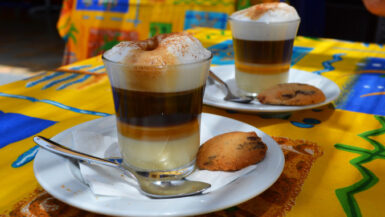
Leave a reply