


While staying in Playa San de Juan, we noticed that even though the town was relatively quiet, Taberna Marinera Agua y Sal, had a queue outside it. Inside was rammed. From the lively chatter spilling onto the street, we could tell the diners were mostly Spanish speakers. It was six nights before we managed to actually eat there. When we did, we discovered why the queue was a slow-moving one. Diners have to file past a fish & seafood counter and choose what they want to eat before being directed to their tables. As there’s not much of a chance to have a look at the ‘goods’ before reaching this counter, choosing is a pressure situation, especially when unfamiliar with the procedure. But as eating experiences go, it was different and fun, and the atmosphere was positively buzzing.
It got me thinking about other Tenerife dining experiences that didn’t involve typical restaurant scenarios. Some (not all) can be applied to the other Canary Islands.
Guachinche
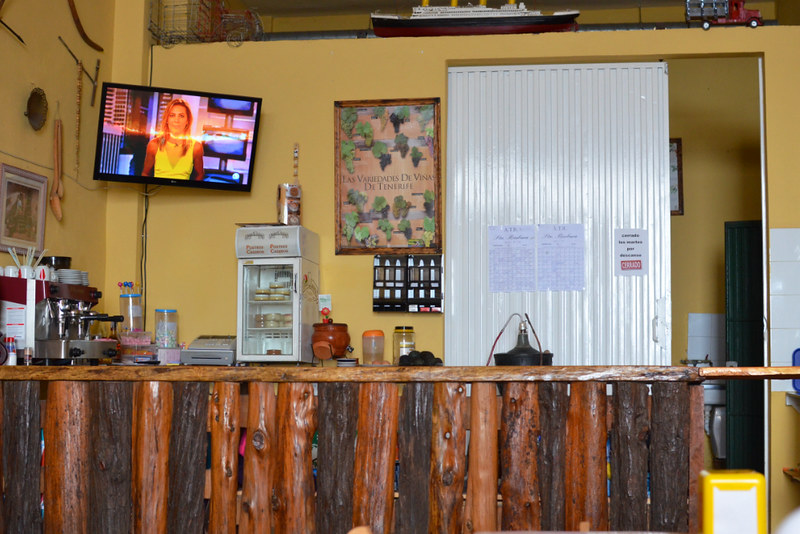
In theory, no two of these makeshift restaurants, originally unique to the north of Tenerife, are the same. Each time you visit a guachinche, it can feel like a new experience. Our first was in a cabin hidden away among huertas (allotments) in Tacoronte. Since then, we’ve eaten in guachinches which aren’t dissimilar to traditional restaurants, garages attached to houses, and tucked away in discreet courtyards. Menus are limited by law and the wine should be produced by the owner. It’s probably the most authentic Tenerife dining experience going.

Cofradia de pescadores
A Cofradia de Pescadores is the place for the freshest fish and seafood. These are fishermen’s guilds. Each of the Canary Islands has them; although, Tenerife has most, more than double that of neighbour Gran Canaria. You find them in towns where there’s a harbour with a fishing fleet. One of our favourites was the Cofradia de Pescadores in Puerto de la Cruz as it occupies a fabulous position overlooking the harbour. I say ‘was’ because it’s become one of the most upmarket ones with prices to match. On our last visit, there was no parrillada de pescado (selection of grilled fish) as the sea had been too rough for fishing. It was disappointing, but it illustrates the commitment to serving fish straight from the briny.

Centro Comercial (shopping centre)
We wouldn’t normally eat in a shopping centre in the UK as it generally means being restricted to a selection of international food outlets. There might be chains in C.C.s in the Canaries, but they’re often Spanish ones, like 100 Montaditos or Goika, which makes them more interesting. And there are also independent outlets. The best burger we’d eaten in a long time was at La Oficina (no longer there) in La Villa in La Orotava. In the supermercado itself, there’s a little bar where you can take a break and have a cerveza with a snack. In La Villa in La Laguna, there are also loads of restaurants and cafes with menus ranging from Venezuelan and Canarian to burger joints and Chinese.

Fiesta food
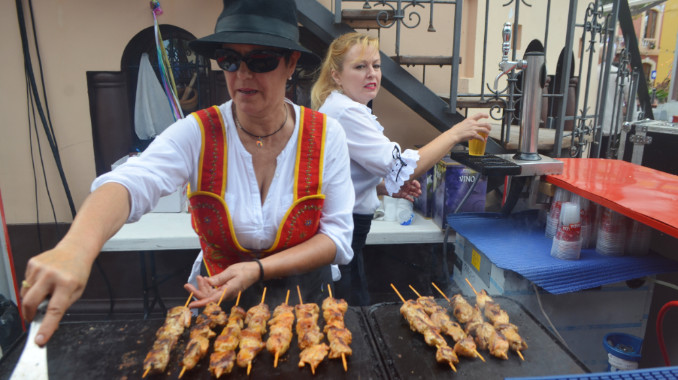
We love fiesta food, whether it’s squeezing in beside caballeros to eat pinchos moruno (spiced pork skewers) and drink vino del país (country wine) from a coke bottle at a fiesta stall in the north Tenerife hills, or grabbing a stool at one of the bigger, glitzier affairs that appear for the main carnivals. Every fiesta has them; all you have to do is find where there’s a fiesta taking place and dive in.
Zona recreativa
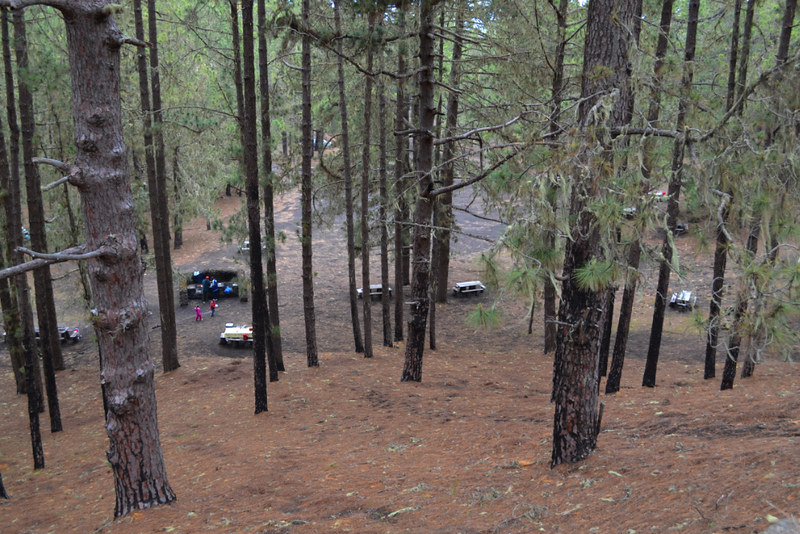
These are recreation zones, basically picnic areas with benches, barbecues, and varying facilities, which are located in scenic spots . There are twenty listed on the official Tenerife website, sixteen of which are on the northern side of the island. But there are far more, mostly smaller areas often located just off main and secondary roads. The biggest (like Las Raíces, Las Lajas, Arenas Negras etc) can accommodate hundreds of people; the smallest have only a handful of benches. For a full-on experience, visit a big zona recreativa at weekends or on public holidays. If you want one virtually to yourself, go midweek; although some beside popular hiking routes can be relatively busy midweek as well.

Kioscos
There are kioscos all over Tenerife, but we’re specifically talking about ones located in plazas in traditional towns, where a drink and a snack comes served with an insight into local life. They’re superb people-watching spots. Garachico is a particular favourite because of the setting. La Orotava for a similar reason. Another favourite is Los Silos because we once enjoyed the most delicious homemade fig tart there.

Petrol station
Maybe not the most salubrious of places to eat, but restaurants and cafés in petrol stations on Tenerife often serve decent food at low prices. Some have suprisingly nice restaurants. Spanish newspaper El Diario lists La Chasnera (Granadilla de Abona), El Mirador (Los Realejos), El Volcán (near Güímar), and El Bohío (La Matanza) as the best. El Mirador is our favourite. As the name suggests, it has excellent views as well. They usually go over-the-top there with their Christmas decorations.

Mercados
Food markets are usually reliable places to try local food anywhere. The number one on Tenerife for us is downstairs at the fish market at La Recova in Santa Cruz. Amid counters displaying fish and seafood, there’s a tasty selection of food outlets serving traditional as well as contemporary cuisine.

Romería
There is a distinction between romerías (roughly translated as a type of harvest festival) and other fiestas because of the entertaining way food is ‘distributed’ at them, i.e. handed or chucked from the back of decorated carts (ox-drawn ones in the main romerías). Getting the best food (chunks of meat barbecued on the back of carts) is an art-form that has to be learnt. However, even romería novices should end up with something – boiled eggs, papas arrugadas, gofio amasado, wine (obviously not thrown).
While writing this, others popped into my head – tapas routes, bus stations, a cave – but enough is enough. If anyone has other examples of off-the-wall (or even in-the-wall) dining on Tenerife, we’d love to hear about them.
Click here to check out The Real Tenerife Guidebook for more in-depth tips about gastronomy on Tenerife.


Leave a reply