



Away from the tourist resorts, authentic dining in Canarian restaurants on Tenerife can come as a culture shock for some, leading to undeserved poor reviews. This explains why.
I get quite a few of ideas for what to write from things I read. Things that sometimes can have steam blowing cartoon-like out of my ear and Andy jumping in her chair as I suddenly bellow “what a load of tosh. You cannot be serious” causing the flock of Canary birds chirping happily in the orchid tree outside our house to take to the air en masse and depart for branches in a more tranquil location.
Some of the time the source of these outbursts are other writers – usually people writing copy from an office somewhere who’ve never set foot on the island. I’ve lost count of the times I’ve read about Tenerife being in the Mediterranean. Sometimes it can be writers who have actually visited Tenerife, and then still get it wrong. One wrote about cruise ships docking at Puerto de la Cruz. When I pointed out, in private, they might want to amend their article as cruise ships didn’t dock in Puerto, they got a bit sniffy and insisted their information was sound. After that I gave up offering helpful advice to other writers.

But the winner of the best source of info that regularly boggles my mind is Tripadvisor. It’s a great resource for information, but it is one which comes with a health warning – use with caution.
The latest risk to my blood pressure was courtesy of some comments about a restaurant in Santa Cruz which is one of the favourites of a foodie friend who lives in Tenerife’s capital.
There were lots of comments which painted quite a different picture from the place I knew.
These included ‘aggressive staff’, ‘don’t know how to treat foreigners’, ‘slovenly’, ‘awful food in dirty house’, ‘service slow’, ‘difficult to order food’, ‘service abysmal’, ‘bad service and sticky tables’, ‘typically touristy’ and ‘for tourists only’.
The eagle-eyed out there might have spotted that if they ‘don’t know how to treat foreigners’ then it’s highly unlikely they’re ‘for tourists only’.
There were also a few remarks about the dishes which arrived at the table not matching what had been ordered.
Clearly when it comes to dining, views are subjective. But there are times when things simply don’t add up and this was one of them. Like so many things, it can help to take a step back and look at the bigger picture. In this case considering what might be at the root of many comments.
After mulling them over, as well as similar ones about other traditional Canarian restaurants, the conclusion I came to was commenters had fairly recounted their experiences… as they saw them. However, when you join the dots together the picture painted is one of unfamiliarity with Canarian dining.
Bad Service
Anyone who has eaten in busy Canarian restaurants that are very popular with locals will know it can be a noisy, frantic dining experience. Sometimes you can’t hear yourself think – that’s part of the appeal. Dining in the Canaries can be a vivacious social affair, something to be enjoyed at full volume unlike the library atmosphere you can find when dining out in some destinations. Waiters rush about like mad trying to keep the masses fed and watered, but it’s not always easy to catch their eye. You have to be assertive, sometimes an ‘oiga’ is required. It’s not rude even though it sounds it to us Brits. And it does the trick. Do it in a friendly manner and the response will mirror this. Get shirty and the chances are the experience will go downhill from there. Sometimes we have to seek out a waiter. It’s no big deal. However, when you’re used to waiters turning up diligently at your table – which is what does happen in most restaurants on Tenerife anyway – it’s not easy to adjust to this. Subsequently all some people might see is bad service.
Aggressive staff/wrong orders
This is simple to explain. I see it in reviews all of the time. It’s all about language. Outside of the resorts English isn’t as widely spoken on Tenerife as some people might think. Tinerfeños are about as friendly a people as we’ve met on our travels, even though occasionally some can initially come across as gruff. Not being able to understand leads to frustration on both parts… and wrong orders.
Slovenly/dirty/sticky tables
People eat with enthusiasm here. Often we grab tables in busy traditional restaurants which still have remnants left by the previous inhabitants. Simple as that. But it is true, waiters can be slow to clean up tables. Another aspect of Canarian dining some people aren’t comfortable with is that sometimes you can be expected to hold onto the same knife and fork throughout the meal. We thought it odd at first, but now it’s no big deal.
Slow service
Yup, often things aren’t done in a hurry. It’s a by-product of the lifestyle on the islands. A few nights ago we watched a group of Canarios ‘settle’ into their seats in the restaurant we were in. It must have been half an hour by the time all the greetings were made and people were actually ready to look at the menu. The waitress knew there was no point in going anywhere near before they called her. Lunch and dinner are things to be enjoyed at a leisurely pace. We’ve settled right into this way of dining and often have to tell waiters ‘momentito mas por favor,’ when they arrive at our side to take the order. The upshot is that there are times when you have to be more proactive than you might be used to when it comes to having your order taken and then getting the bill at the end of the night.
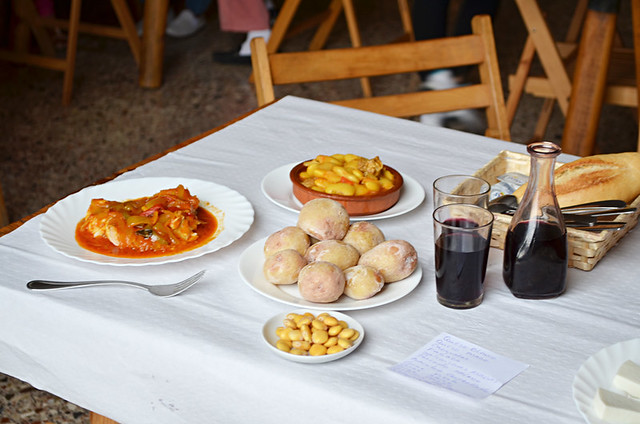
For tourists only
This is more difficult to explain, especially in a case like the one in question where even most of those who hadn’t enjoyed their experience noticed that the bulk of diners around them were locals. We have a theory. Andy has named it ‘designer authentic’ – people looking for what they think of as a local experience but one which fits their idea of what authentic should be. This is often a more sanitised, user-friendly version of the real thing. If something doesn’t fit that image then it can’t be authentic… even when it is. There are quite a few places around the Canary Islands which fit the ‘designer authentic’ tag perfectly, having people crowing about authentic experiences when they are in what is really more of a halfway house. There’s nothing wrong with that and it is still a ‘local’ experience. It’s just that sometimes authentic can be just too authentic for some.
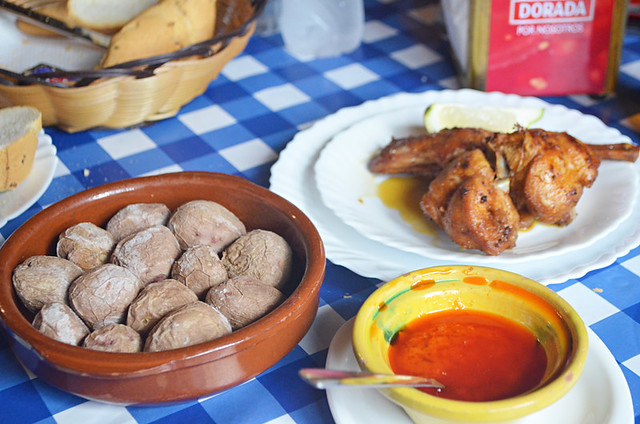
All of this might just be supposition of course. But there’s one piece of the jigsaw I’ve left out till now. All of the comments mentioned were in English language reviews. Most Spanish language reviews were positive, describing the restaurant I knew. That speaks volumes – it shouts from the rooftops the big difference is a cultural one. One group is schooled in the art of Canarian dining, the other isn’t.
Jack is co-editor, writer and photographer for BuzzTrips and the Real Tenerife series of travel websites as well as a contributor to online travel sites and travel magazines. Follow Jack on Google+


I have eaten in that restaurant a couple of times, always speak Spanish to the people working there, always and I have to say, I just found it very unpleasant, having eaten in many Canarian restaurants this was not one of the best, we were being very definitely rushed out and wanted to enjoy a bottle of wine and dinner but it was made clear there was not time for us to do this, it’s fine, the food is good solid Canarian fare but there are places with better service all over the island and especially in Santa Cruz. Non Spanish speakers and those unfamiliar with Canarian food will definitely find it difficult but that’s not the case here, they just really made us feel like we were in the way and had to rush and get out as soon as possible.. just my experience on the second visit there, maybe they had a big table coming and needed the space, I don’t know but..it was far from the experiences in other traditional places Or maybe they think people from other countries are in a hurry, really it could be anything.
Sometimes restaurants, even ones that are usually dependable, don’t get it right and the result is simply just a bad dining experience. The restaurant in question was used mainly as an example to illustrate how people’s experiences can be influenced by not understanding cultural differences.
This also happens in TripAdvisor reviews of Ireland. I do advise the readers of TripAdvisor to look at the other reviews by the reviewers whose judgement you are questioning. This gives you an idea of what their criteria are.
That’s a good tip.
Interesting take on cultural differences
The restaurant if its the one I think has a super reputation in Santa Cruz but I can see all the comments being true to some degree
Adaptation is a process and not so easy for tourists in Santa Cruz for the day
It’s something that can be evident in various reviews about some of the more traditional places. One of the most common being along the lines of ‘we ate there at 7pm and there was no atmosphere at all’. From our very first holidays together one of the first things we’d do when going into a restaurant/bar in a new destination was to try to figure how things worked differently. Sometimes it could be quite indimitading. When it comes to restaurant reviews in places such as Tenerife, where you get a diverse mix of people with varying holidaying preferences, you can often see the contrast between people who relish those differences in cultural habits and people who find them uncomfortable. Your point about cruise passengers in Santa Cruz is a good one.